
Beginner bird identifier guide: from first sighting to confident identification
Published 7/10/2026 • 10 min read
A bird flashes across the path. Something brown lands in a hedge. A shape calls from the top of a spruce, then vanishes. For a beginner, bird identification often starts with an unsatisfying glimpse and a question: what was that?
The good news is that you do not need to memorize every bird in your region before you can identify one. Field birding is a process of narrowing possibilities. You collect a few reliable clues, ignore a few misleading ones, and decide how confident you can be. Sometimes the answer is a species. Sometimes it is only “sparrow,” “hawk,” or “probably a warbler.” That still counts as progress.
This guide walks through a practical bird identifier workflow: from first sighting, to field notes, to photo or sound checks, to a confident — or appropriately cautious — identification.
Start with the bird’s first impression
Before reaching for a field guide or app, pause for the bird’s overall impression. Birders often call this “shape and behavior,” and it is more dependable than color alone.
Ask yourself:
- Is the bird small, medium, or large?
- Is it compact, long-tailed, round-headed, crested, lanky, or heavy-bodied?
- Does it hop, walk, climb, swim, soar, hover, or cling to bark?
- Is the bill thin, thick, hooked, long, short, pointed, or conical?
- Where is it: ground, reeds, open water, treetop, feeder, fence wire, mudflat?
A small brown bird on a lawn may seem impossible at first. But if it walks rather than hops, has a slim bill, and holds itself upright, you may be looking at a thrush-like bird rather than a sparrow. A bird clinging vertically to a trunk with a stiff tail suggests woodpecker or creeper. A raptor with long, narrow wings and steady hovering points in a different direction than a broad-winged hawk circling high on thermals.
These first impressions are not glamorous, but they are the foundation of good identification.
Use size carefully
Size is useful, but it is easy to misjudge. Distance, lighting, excitement, and the absence of nearby reference points can all distort scale.
Instead of thinking “small” or “big,” compare the bird to familiar species:
- Smaller than a House Sparrow?
- Robin-sized?
- Crow-sized?
- Goose-sized?
- Larger than a gull?
If you do not know those birds well, use objects: fence posts, leaves, feeder ports, roof tiles, or the width of a path. A “tiny bird” on the far side of a pond may turn into a medium-sized shorebird once you have context.
When using a bird identifier tool, size can help filter results, but treat it as one clue among several. Do not let a shaky size estimate overrule stronger evidence such as bill shape, flight style, habitat, or voice.
Look for field marks, but do not chase every detail
Field marks are visible features that help separate one species from another: wing bars, eye rings, streaked breasts, tail patterns, colored patches, leg color, bill color, and so on.
For beginners, the trick is not to notice everything. It is to notice the right kind of thing.
Helpful field mark questions
- Does the bird have wing bars?
- Is the breast streaked, spotted, plain, or patterned?
- Is there a bold eyebrow line, eye ring, mask, or crown stripe?
- Are the wings contrasting with the body?
- Is the tail long, short, forked, rounded, or often flicked?
- Are there bright patches that appear only in flight?
Color can be helpful, but it changes dramatically with light. A yellow bird in deep shade may look olive. A white bird at sunset may look peach. Wet feathers, molt, juvenile plumage, and worn feathers also complicate matters.
If you only see one mark, be cautious. A single “yellow patch” or “white stripe” may not be enough. A combination — such as size, bill shape, habitat, and two visible field marks — is much stronger.
Notice habitat and season
A beginner bird identifier should always include two questions: where and when?
Birds are not evenly distributed across the landscape. A duck in open water, a sparrow in dry grass, a warbler in spring woods, and a shorebird on exposed mud each belong to different likely groups. Habitat does not prove identity, but it shapes probability.
Season matters too. Some birds are year-round residents. Others pass through briefly in migration. Some males look bright in breeding plumage and duller later in the year. Juveniles may look confusingly different from adults.
If a suggested identification seems unlikely for your location or date, do not reject it automatically, but slow down. Rare birds do appear, escapes happen, and range maps are imperfect. Still, common birds are common for a reason. Most beginner identifications are solved by considering the regular local species first.
For more general field habits and observation pointers, see the Bird Lens birding tips.
Record what you can before checking answers
The fastest way to forget a bird is to look away too soon.
If the bird is still visible, keep watching. If it leaves, make a short note immediately. Even rough notes are better than memory reconstructed five minutes later.
Useful notes include:
- Date and location
- Habitat
- Size comparison
- Shape and posture
- Bill shape
- Main colors and patterns
- Behavior
- Flight style
- Call or song description
- Whether you photographed or recorded it
A sketch can help even if it is ugly. Draw the body shape, bill length, tail length, and any bold marks. The point is not art; it is attention.
Use photos well
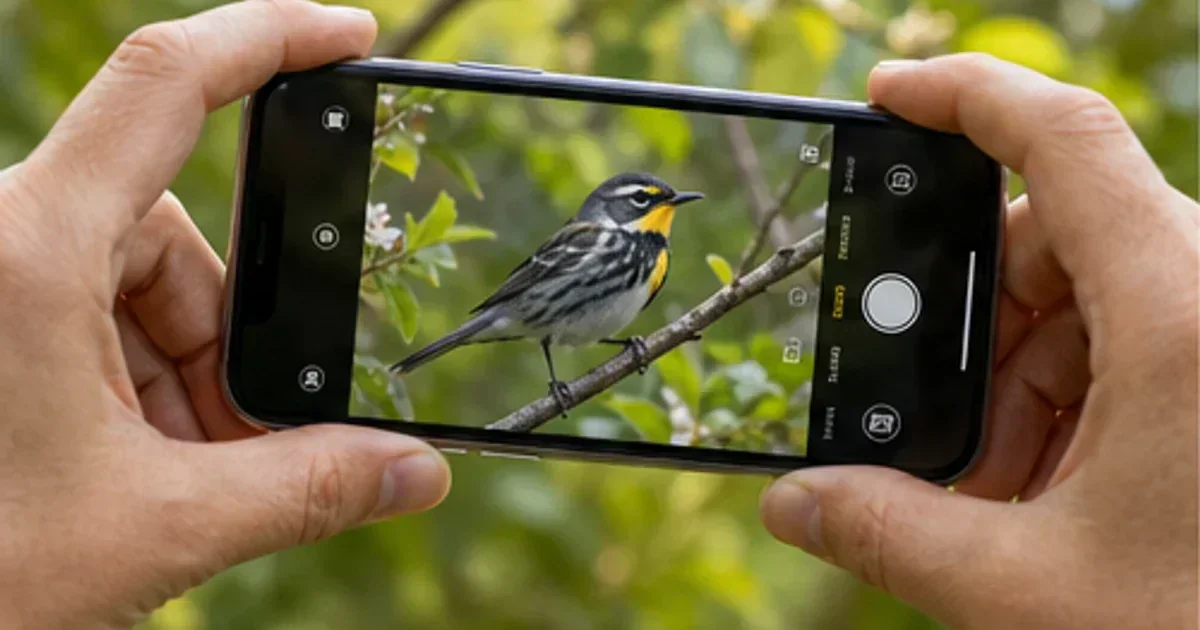
A photo does not need to be beautiful to be useful. A blurry image can still show wing shape, tail length, bill structure, or a pattern on the face. Take several photos if you can, especially from different angles. One side view and one front or back view may reveal more than a single sharp portrait.
When photographing birds, avoid chasing them for a better shot. Move slowly, stay on paths where required, and let the bird choose its distance. If it stops feeding, alarms repeatedly, crouches, leads young away, or keeps moving because of you, you are too close.
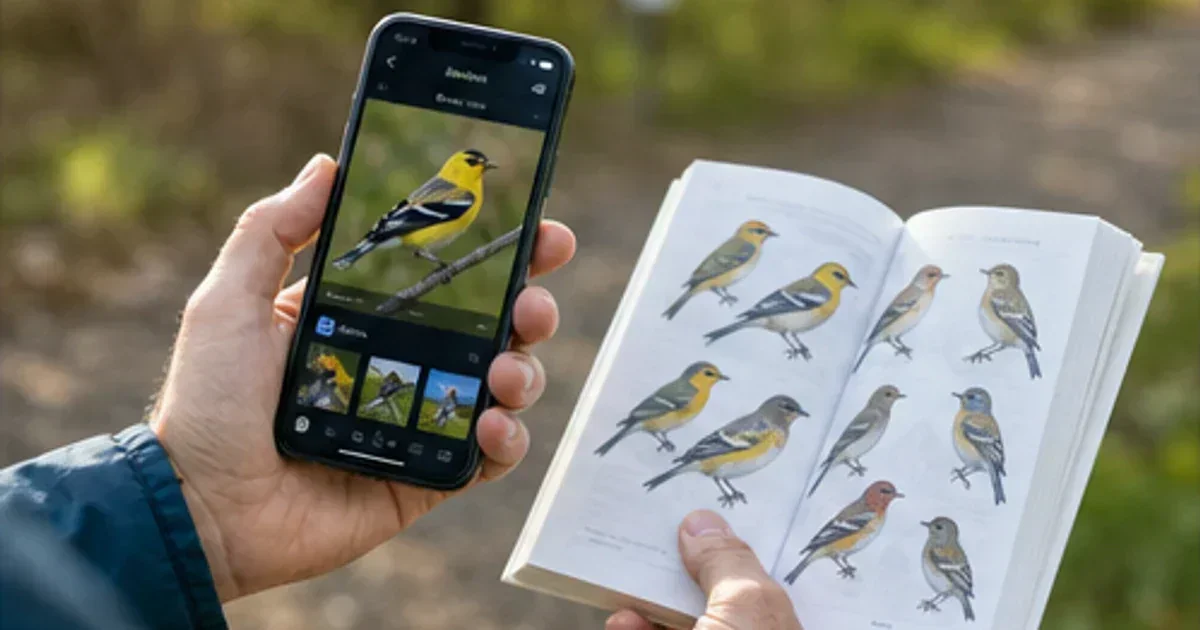
You can use Bird Lens photo identification to compare an image against likely matches. Treat the result as a suggestion, not a verdict. Review the alternatives, check the date and location, and compare visible features yourself.
Photo limitations to remember
Photo ID may struggle when:
- The bird is very distant or heavily cropped
- The image is backlit
- Only part of the bird is visible
- Juvenile or molting plumage is involved
- Several similar species overlap in your region
- The bird is in an unusual posture
A good workflow is to ask, “What features in the photo support this identification, and what features argue against it?”
Learn to use sound without overconfidence
Many birds are heard more often than seen. Calls can identify hidden birds in dense leaves, reeds, night skies, and migration overhead. But bird sounds are also easy to misread at first.
A song is usually longer and more patterned, often used by males during breeding season. Calls are often shorter: chips, contact notes, alarms, flight calls, begging sounds. Some species have many call types. Some birds mimic others. Background noise, echoes, and overlapping singers can confuse recordings.
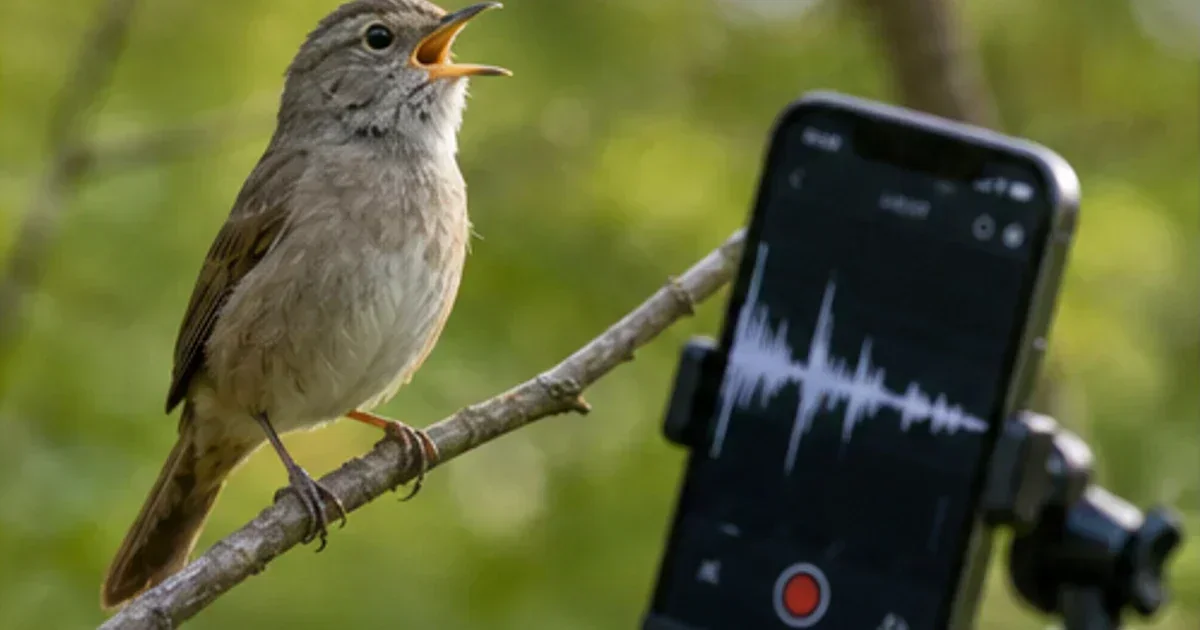
If you record a bird, capture at least 10–20 seconds when possible. Avoid talking over the sound. Note the habitat and whether you saw the bird making the call. A sound recorded in a city park with three species vocalizing at once may produce several plausible matches.
Bird Lens also offers sound identification, which can help narrow possibilities. As with photo tools, use it alongside your own observations. Sound evidence is strongest when the same bird is seen and heard, or when the call is distinctive and repeated.
Build confidence by eliminating options
Identification is often less about finding the perfect match and more about ruling out poor matches.
Suppose you saw a medium-sized bird on a wire with a long tail. It flew out, caught an insect, and returned to the same perch. That behavior points toward flycatchers or similar aerial feeders. If the bird had a dark head, white belly, and forked tail, you have narrowed the field further. If it was near open farmland in summer, your confidence grows.
On the other hand, if you only saw “a gray bird in a tree,” the honest answer may remain uncertain.
A practical confidence scale
Use a simple scale:
- Certain: Multiple strong features match, and similar species are ruled out.
- Likely: Most features fit, but one or more details were missed.
- Possible: Some features fit, but the view or evidence was limited.
- Unidentified: Not enough information, or conflicting clues.
There is no shame in “unidentified.” Experienced birders leave birds unidentified regularly. A careful “possible Song Sparrow” is better than a forced certainty.
Be alert to common beginner traps
A few mistakes cause many wrong identifications.
Lighting tricks
Backlighting can turn colorful birds into silhouettes. Strong sun can wash out subtle marks. Shade can make bright plumage look dull.
Juveniles and molt
Young birds may be streaky, fluffy, dull, gape-mouthed, or oddly proportioned. Molting birds can look patchy or worn. Do not expect every bird to match the clean adult illustration.
Sex differences
Male and female plumages may differ greatly. A bright male may be easy; a female of the same species may be muted and harder to place.
Overweighting rare matches
A rare bird suggestion is exciting, but excitement is not evidence. Check common local species first, especially similar ones. If you think you have found something unusual, gather photos, audio, notes, and location details before making a public report.
Beginner bird identification checklist
When you see an unfamiliar bird, run through this short checklist:
- Where is it? Habitat, height, water, ground, trees, buildings.
- How big is it? Compare with a familiar bird or object.
- What shape is it? Body, bill, wings, tail, posture.
- What is it doing? Feeding, climbing, swimming, soaring, flicking tail.
- What marks stand out? Wing bars, streaking, eye line, patches, tail pattern.
- What does it sound like? Song, call, rhythm, pitch, repetition.
- When and where? Date, region, season, local likelihood.
- What evidence do you have? Notes, photo, recording, memory.
- How confident are you? Certain, likely, possible, or unidentified.
Practice with common birds first
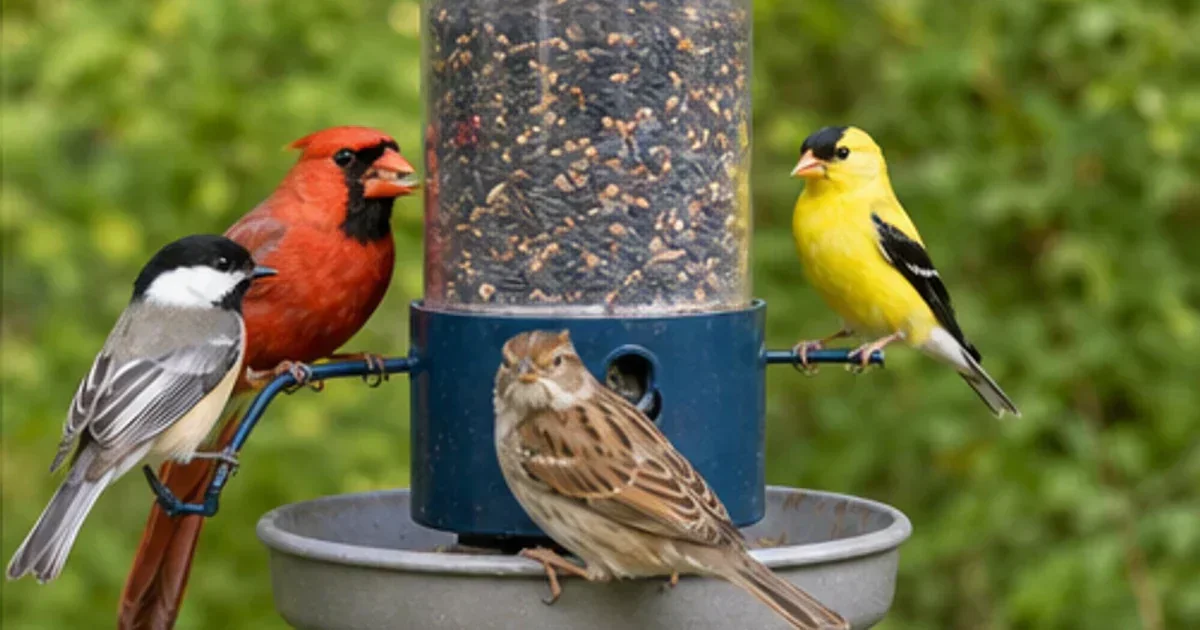
A reliable birder is built on common birds. Learn the species you see often: feeder birds, pigeons, crows, gulls, robins, blackbirds, local sparrows, neighborhood raptors. Watch how they move. Listen to their everyday calls. Notice how they look in bright sun, rain, shade, and flight.
Common birds teach structure and behavior. Once you know a crow’s wingbeat, a starling’s walking style, or a robin’s posture, unfamiliar birds stand out more clearly.
If you want a step-by-step companion to this process, bookmark the Bird Lens beginner bird identifier guide.
Observe ethically
Bird identification should not come at the bird’s expense. Keep distance from nests, roosts, and feeding birds. Do not flush birds repeatedly to see wing patterns. Avoid playback, especially during breeding season or around sensitive species, unless you understand local guidance and have a strong reason. Stay on marked trails in fragile habitats.
For photography and recording, patience is usually better than pressure. A calm bird often gives better clues than a stressed one, and the observation is more rewarding.
Conclusion
Bird identification improves when you slow down. Start with shape, size, behavior, habitat, and season. Add field marks, photos, and sounds. Compare likely options, rule out weak ones, and give your conclusion the confidence level it deserves.
Some sightings will remain mysteries. That is normal. Each careful observation trains your eye and ear for the next bird — and the next one will often stay just long enough for you to notice a little more.
Try the tools
Put this guide into action
Use Bird Lens to identify a bird by photo or sound, then compare field marks and habitat.
Photo Bird ID
Upload a bird photo for AI-assisted species identification with encyclopedia links.
Sound Bird ID
Record bird songs and calls to get likely species matches from your audio capture.
Field Notes Bird ID
Identify likely birds from field marks, habitat, behavior, place, and date.
Similar Species Comparison
Compare two easily confused bird species using diagnostic field marks.