
Winter Birding Tips for Finding and Identifying Species
Published on 10/20/2025 • 8 min read
Winter birding can look quiet at first glance. Leaves are down, insects are scarce, and many familiar migrants have moved on. But the season has its own rhythm. Birds concentrate around food, shelter, open water, and edges where weather meets habitat. If you learn to read those winter patterns, you can often find more birds than expected—and identify them with better confidence.
Cold weather also changes how birds behave. Some species become bolder around feeders. Others travel in mixed flocks, moving fast through bare branches. Waterfowl gather where ice leaves an opening. Raptors perch low on roadside poles and field edges, watching for small mammals in exposed grass.
The tips below are practical ways to find birds in winter and make careful identifications without putting unnecessary stress on wildlife.
Start With Winter Habitat, Not Just a Species List
In winter, birds are often easier to predict by habitat than by wish list. Before heading out, think about what birds need that day.
Food Sources
Look for places where natural food remains available:
- Seed heads in weedy fields
- Berry-producing shrubs and trees
- Cone-bearing evergreens
- Mudflats and shallow water edges
- Brushy thickets with cover nearby
Finches, sparrows, waxwings, robins, and thrushes may gather around fruit or seed crops. Woodpeckers often work dead limbs and snags. Chickadees, nuthatches, creepers, and kinglets search bark and twigs for dormant insects and eggs.
A winter field that looks messy to a gardener can be excellent bird habitat. Standing goldenrod, cattails, brambles, and uncut grasses all provide food and cover.
Shelter and Wind Breaks
Birds conserve energy in cold weather. On windy days, check the lee side of hedgerows, forest edges, ravines, and evergreen stands. Even a small patch of conifers can hold roosting owls, finches, or mixed songbird flocks.
Sunny edges can be active too. A south-facing woodland edge may warm enough to draw insects into motion, and small birds notice those tiny changes.
Open Water
When ponds, lakes, and marshes freeze, birds concentrate in the remaining open water. Rivers, spillways, warm-water discharges, tidal areas, and spring-fed ponds can attract ducks, geese, gulls, herons, and kingfishers.
Use caution around ice and keep distance from roosting waterfowl. Birds in winter are managing tight energy budgets. If a flock repeatedly flushes because of your approach, you are too close.
Time Your Outings Around Weather
Winter birding is strongly shaped by weather. The best time is not always the brightest bluebird day.
After a storm, birds may feed intensely. Before a major cold front, activity can rise as birds prepare. On very cold mornings, some species start slowly, waiting until the sun hits branches, fields, or mud edges. In mild spells, birds may spread out and become harder to pin down.
Wind matters as much as temperature. Strong wind makes hearing difficult and pushes birds into sheltered pockets. If you have only an hour, choose a protected trail, a wooded creek, or a feeder viewing area rather than an exposed hilltop.
Snow can help. Tracks, seed scatter, wing marks, and fresh droppings can point to recent bird activity. A dusting of snow also makes dark birds easier to see against fields and branches.
Watch Mixed Flocks Carefully
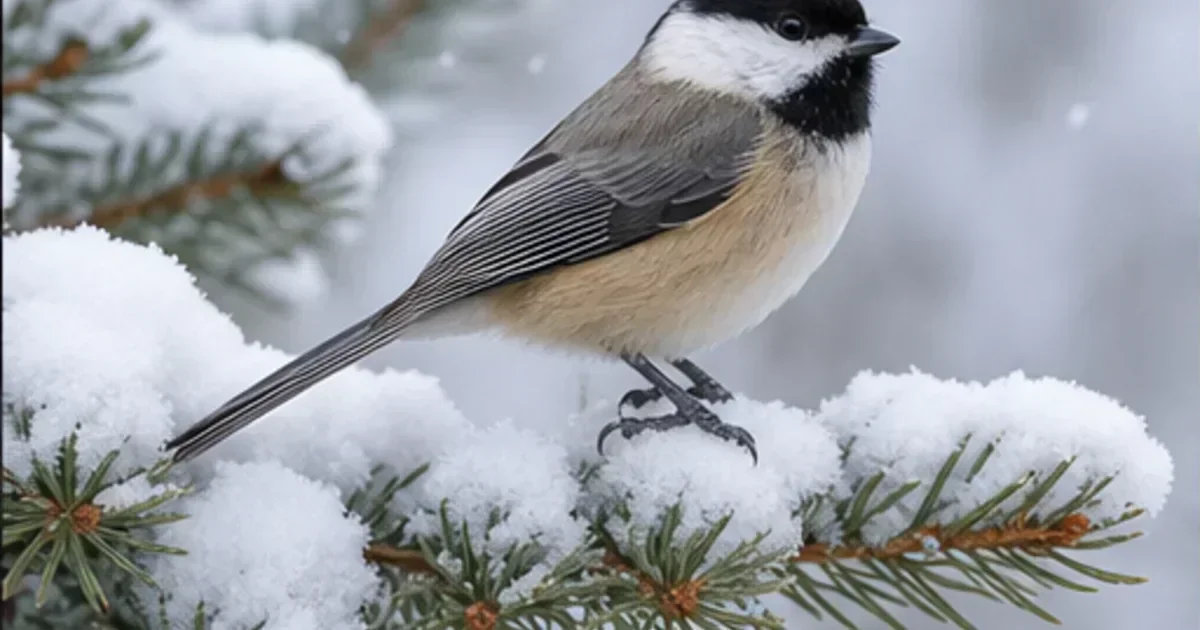
Winter songbirds often move in loose mixed flocks. Chickadees may be the easiest to hear, but they are rarely the whole story. When you find active chickadees or titmice, pause and scan around them.
Look for:
- Nuthatches moving headfirst down trunks
- Brown Creepers spiraling upward on bark
- Downy Woodpeckers tapping small limbs
- Kinglets flicking wings in outer twigs
- Sparrows staying lower in brush
- Occasional warblers in mild or coastal areas
Mixed flocks move quickly, but they often follow a path. Instead of chasing each bird, stand still and let the flock pass through your field of view. This gives you more time to compare size, shape, movement, and calls.
If you are new to field marks, a beginner-friendly overview can help you build a consistent process. Bird Lens has a practical beginner bird identifier guide that pairs well with winter practice.
Identify Winter Birds by Structure and Behavior
Plumage can be duller in winter. Young birds may not match the clean adults shown on field guide plates. Light can be flat, and birds may be partly hidden. That makes structure and behavior especially important.
Shape Comes First
Before color, note the bird’s basic shape:
- Is it round and compact, or long and slender?
- Does it have a thick seed-cracking bill or a fine insect-picking bill?
- Is the tail long, short, forked, or stiff?
- Does it perch upright, cling sideways, or walk on the ground?
A sparrow, wren, finch, and warbler may all look “small and brown” at a glance. Shape and posture usually separate them faster than color.
Movement Gives Clues
Winter birds often reveal themselves by how they move. Juncos hop and flash white outer tail feathers. Nuthatches creep down tree trunks. Creepers work upward and then fly down to start again. Kinglets hover and flick constantly. Woodpeckers brace with stiff tails.
Waterfowl identification also benefits from behavior. Dabbling ducks tip up in shallow water. Diving ducks vanish and reappear farther away. Mergansers sit low and often hunt actively. Gulls rest, loaf, and shift positions; patient observation can reveal leg color, bill pattern, and wing structure.
Color Still Matters, But Use It Carefully
Winter light can mislead. A gray bird may look brown at sunrise. A white belly may pick up blue shadows from snow. Wet feathers can darken.
When using color, focus on patterns rather than exact shades:
- Wing bars
- Eye rings
- Crown stripes
- Throat patches
- Tail edges
- Rump color
- Contrast between back, breast, and belly
If a mark is seen only once, treat it as provisional. Try to confirm it from another angle.
Use Photos and Sound Without Letting Them Replace Fieldcraft
A quick photo, even a poor one, can help later. It may capture bill shape, wing bars, tail length, or a field mark you missed. If you use Bird Lens, the photo ID tool can be useful for narrowing options, especially when combined with your notes on habitat and behavior.
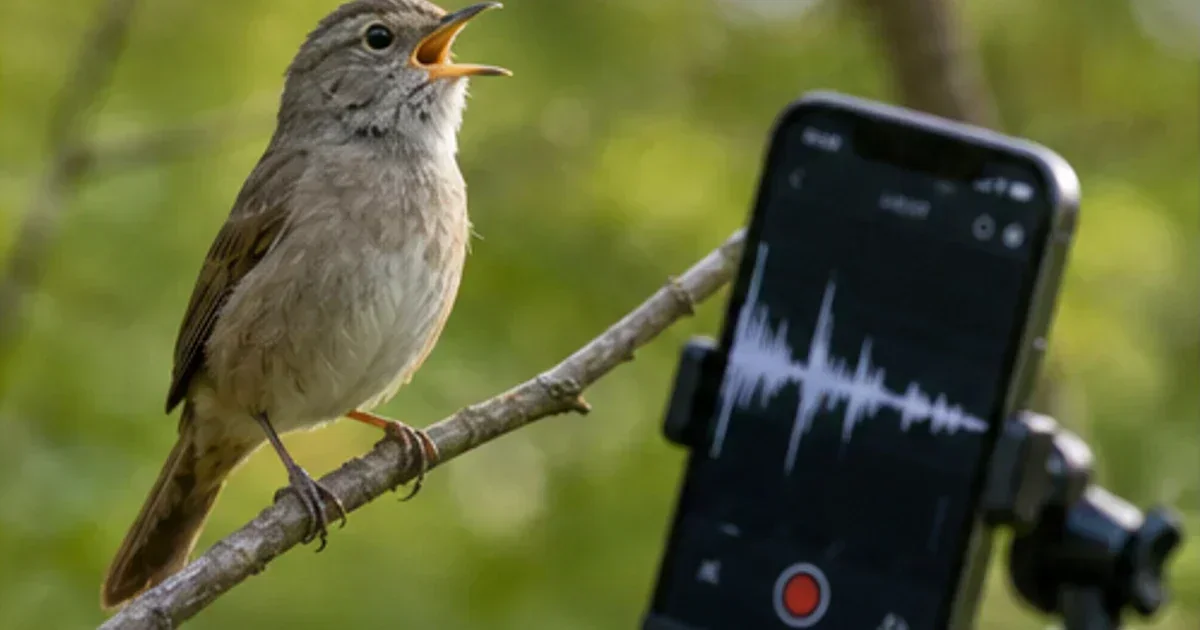
Sound is just as valuable in winter. Many birds call more often than they sing. Flight calls of finches, contact notes of chickadees, nasal nuthatch calls, and the dry rattle of a kingfisher can all alert you before you see anything. A sound tool can help, but background noise, overlapping calls, and distant birds can create uncertainty. For comparison practice, see the sound ID tool.
Treat any app result as a suggestion, not a verdict. The strongest identifications come from agreement between multiple clues: location, season, habitat, size, structure, behavior, plumage, and voice.
Keep Winter Birding Ethical
Winter birds face real costs when disturbed. Cold weather, short days, and limited food mean that every unnecessary flight burns energy.
A few simple habits help:
- Give roosting owls, waterfowl, and shorebirds extra space.
- Do not approach until birds flush “for a better view.”
- Avoid repeated playback, especially around scarce or stressed birds.
- Stay on established paths when possible.
- Keep dogs leashed where birds feed or roost.
- Do not crowd feeders or private yards.
- Report sensitive species carefully if public attention could cause disturbance.
Photography deserves particular restraint. A sharp image is not worth pushing a bird off food, shelter, or a roost. If the bird changes posture, stops feeding, repeatedly looks at you, or moves away, back off.
Short Winter Birding Checklist
Before you go:
- Check weather, wind direction, and road or trail conditions.
- Choose habitat with food, shelter, or open water.
- Bring binoculars, warm layers, gloves, and a notebook or phone.
- Pack traction if trails may be icy.
- Note sunrise timing; activity often changes fast in the first hours.
In the field:
- Scan sheltered edges before walking through them.
- Listen for mixed flocks and follow them patiently.
- Record size, shape, behavior, habitat, and voice.
- Take reference photos when possible.
- Mark uncertain IDs as uncertain.
Afterward:
- Review notes while memory is fresh.
- Compare similar species side by side.
- Save only confident identifications as final.
- Revisit productive spots after weather changes.
Common Winter Identification Challenges
“Small Brown Birds” in Brush
Sparrows can be difficult in winter. Start with habitat and behavior. Song Sparrows often pump their tails and stay near wet or brushy edges. White-throated Sparrows show a bold head pattern, though brightness varies. American Tree Sparrows, where present, have a small dark breast spot and a bicolored bill, but do not rely on one mark alone.
Finches at Distance
Goldfinches, siskins, redpolls, and house finches can blur together in poor light. Watch flight style, flock behavior, wing bars, streaking, and bill shape. Listen for calls if you can. Irruptive finches may appear in some winters and be absent in others, depending on food crops farther north.
Immature Gulls and Ducks
Gulls and waterfowl can be humbling. Age, molt, hybrids, and distance all complicate identification. It is acceptable to leave some birds as “gull species” or “scaup species” if the view is not enough. Careful uncertainty is better than a forced name.
Conclusion
Winter birding rewards patience and attention to patterns. Find food, shelter, and open water. Let mixed flocks come to you. Identify birds by structure and behavior before leaning on color. Use photos and sound recordings as supporting evidence, not shortcuts.
Some birds will remain uncertain, and that is part of good field work. The goal is not to name everything at any cost. It is to observe well, disturb little, and come away with a clearer sense of how birds make a living in the cold months.
Try the tools
Put this advice into action
Use Bird Lens to identify a bird by photo or sound, then compare field marks and habitat.
Photo Bird ID
Upload a bird photo for AI-assisted species identification with encyclopedia links.
Sound Bird ID
Record bird songs and calls to get likely species matches from your audio capture.
Field Notes Bird ID
Identify likely birds from field marks, habitat, behavior, place, and date.
Similar Species Comparison
Compare two easily confused bird species using diagnostic field marks.
Beginner bird identifier guide: from first sighting to confident identification
Beginner bird identifier guide: from first sighting to confident identification: practical, field-tested guidance for identifying and observing birds with confidence.