
Use Habitat and Behavior Clues to Identify Birds
Published on 9/30/2025 • 9 min read
A bird’s shape, color, and voice matter, but they are only part of the identification puzzle. Habitat and behavior often narrow the field faster than a perfect view. A brown bird in a cattail marsh, a brown bird creeping up a tree trunk, and a brown bird bobbing on a fence post may all be “little brown jobs” at first glance, yet they point in very different directions.
Good bird identification is not just asking, “What does it look like?” It is also asking, “Where is it, what is it doing, and does that make sense for this species?”
Habitat and behavior will not solve every ID. Birds migrate, wander, molt, hide, mimic, and sometimes appear where field guides say they should not. Still, these clues help you form a reasonable short list and avoid forcing an identification from one flashy feature.
Start With the Habitat, Not the Bird
Before studying details, step back. The setting may remove many unlikely options.
Look at the broad habitat first:
- Open water
- Shoreline or mudflat
- Grassland
- Shrubland
- Mature forest
- Urban park or garden
- Wetland or marsh
- Agricultural fields
- Coastal scrub or dunes
Then look closer. “Forest” can mean a damp streamside corridor, dry pine woods, oak canopy, or young regrowth full of tangles. “Water” might be a deep reservoir, shallow pond, tidal creek, or flooded field. Birds sort themselves into these microhabitats more than beginners expect.
A heron standing motionless in shallow water fits its place. A woodpecker hitching up a trunk fits another. A sparrow skulking low in brush near a weedy edge suggests different candidates than a sparrow feeding calmly on short turf.
Habitat does not identify the bird by itself, but it gives the rest of your evidence a frame.
Notice the Bird’s Position
Where a bird sits or moves within the habitat can be highly useful.
Ground, Shrub, Trunk, Canopy, or Sky?
Many birds favor a particular “layer”:
- Sparrows often feed on or near the ground.
- Warblers often move through leaves and outer branches.
- Nuthatches and creepers work bark surfaces.
- Flycatchers perch upright, then sally out after insects.
- Swallows spend much of their time in open air.
- Raptors often circle, soar, or watch from exposed perches.
There are exceptions. A sparrow can sing from a high perch. A warbler can drop to eye level. A hawk may sit quietly in a tree for an hour. But repeated behavior matters. If the bird keeps returning to the same layer, that is a clue worth keeping.
Edge Versus Interior
Some species prefer edges: hedgerows, field borders, forest margins, roadsides, and brushy transitions. Others are more typical of deep woods, open fields, or marsh interiors.
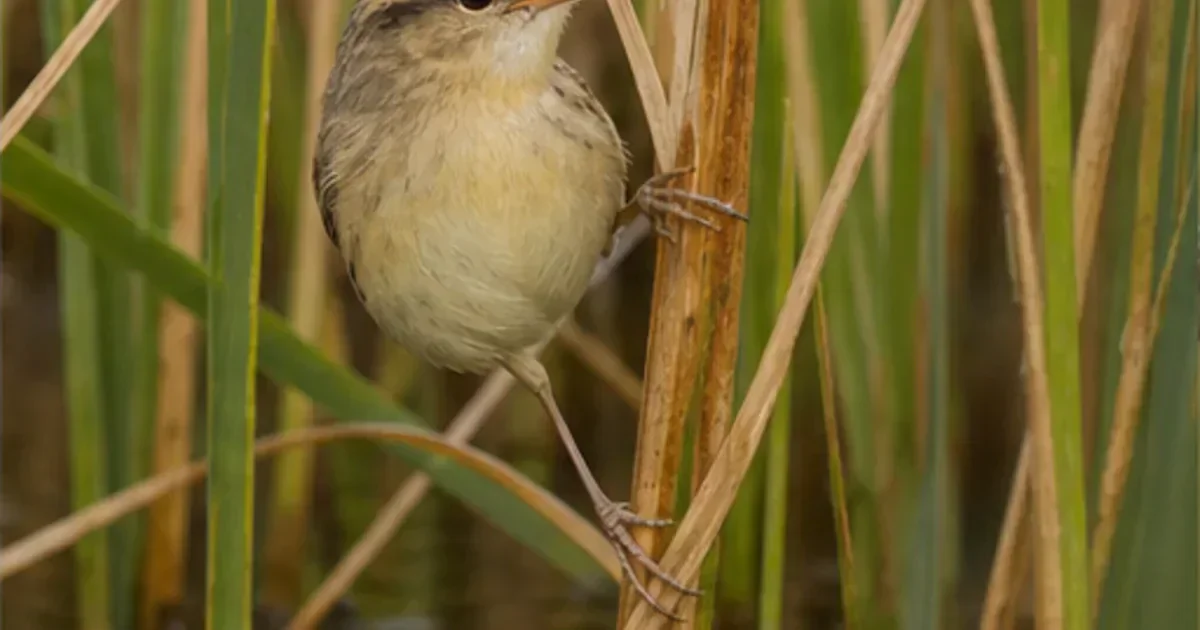
If you hear a song from dense reeds and never see the singer, that already suggests a different set of birds than a song delivered from the top of a bare snag. A bird’s chosen stage often reveals as much as its plumage.
Watch How It Moves
Movement style is one of the best field marks because it can remain visible even when color is poor.
Walking, Hopping, Climbing, or Bobbing
Ask simple questions:
- Does it hop or walk?
- Does it run in short bursts?
- Does it climb headfirst up a trunk?
- Does it move down the trunk headfirst?
- Does it bob its tail?
- Does it pump its tail downward?
- Does it flick its wings?
- Does it creep slowly or dart nervously?
For example, a bird spiraling up a tree trunk behaves differently from one moving sideways along a limb. A bird constantly wagging its tail near water suggests a different group from a bird that crouches low and freezes in dry grass.
Do not overstate one behavior. Birds may act oddly when alarmed, feeding young, avoiding predators, or dealing with weather. But a pattern repeated over several minutes is stronger evidence than a single movement.
Feeding Style
Feeding behavior is especially helpful:
- Probing mud or sand
- Diving underwater
- Dabbling at the surface
- Gleaning insects from leaves
- Hovering briefly near flowers or foliage
- Catching insects in flight
- Hammering bark
- Picking seeds from grasses
- Turning over leaves on the ground
A shorebird probing soft mud should not be judged only by leg color from a distant photo. Its bill length, feeding rhythm, flock choice, and preferred water depth all matter. A duck tipping up with its tail in the air is using a different strategy than one diving and resurfacing yards away.
If you photograph a bird and want help confirming visible field marks, Bird Lens’s photo ID tool can be useful, especially when paired with notes about habitat and behavior.
Use Behavior to Separate Similar Birds
Some of the most frustrating identification problems become easier when you add behavior.
Flycatchers
Many flycatchers look plain: olive, gray, pale wing bars, modest bills. Watch how they hunt. Does the bird sit upright on an exposed perch and dart out after insects? Does it return to the same perch? Does it flick its tail or wings? Is it in open woodland, a stream corridor, or brushy edge?
Voice may still be needed, and some flycatchers are best left unidentified if silent. That is not failure. It is accurate birding.
Sparrows
Sparrows reward patience. One may scratch in leaf litter with both feet, another may creep mouse-like through grass, while another perches up to sing from a shrub. Habitat is often central: saltmarsh, weedy field, desert scrub, woodland edge, or backyard feeder.
Instead of trying to name every streak immediately, first note structure, face pattern, tail length, and behavior. A careful “sparrow in wet meadow, stayed low, short tail, buffy face” is more useful than a rushed guess.
Warblers
Warblers can be active and hard to follow. Habitat and feeding height help. Some favor treetops, some thickets, some conifers, some streamside vegetation. Notice whether the bird gleans calmly, fans its tail, hovers, creeps along branches, or drops down repeatedly.
During migration, warblers can appear in less typical places, so habitat should be treated as supportive evidence rather than proof.
Waterbirds
With waterbirds, posture and feeding method can be decisive. Grebes sit low and dive. Dabbling ducks often feed at the surface or tip up. Cormorants may swim low, dive, then perch with wings spread. Herons stalk slowly or stand frozen before striking.
Distance and glare can distort color. Behavior often remains readable long after plumage details disappear.
Listen for Behavioral Context
Sound is not just a separate category; it often connects with behavior. A bird singing from a territory, giving alarm calls near a nest area, begging as a fledgling, or calling in flight provides context.
Be careful around nests and fledglings. If adults are scolding, carrying food, or behaving anxiously, back away. The identification can wait. Ethical observation means minimizing disturbance, even if that means missing a better view.
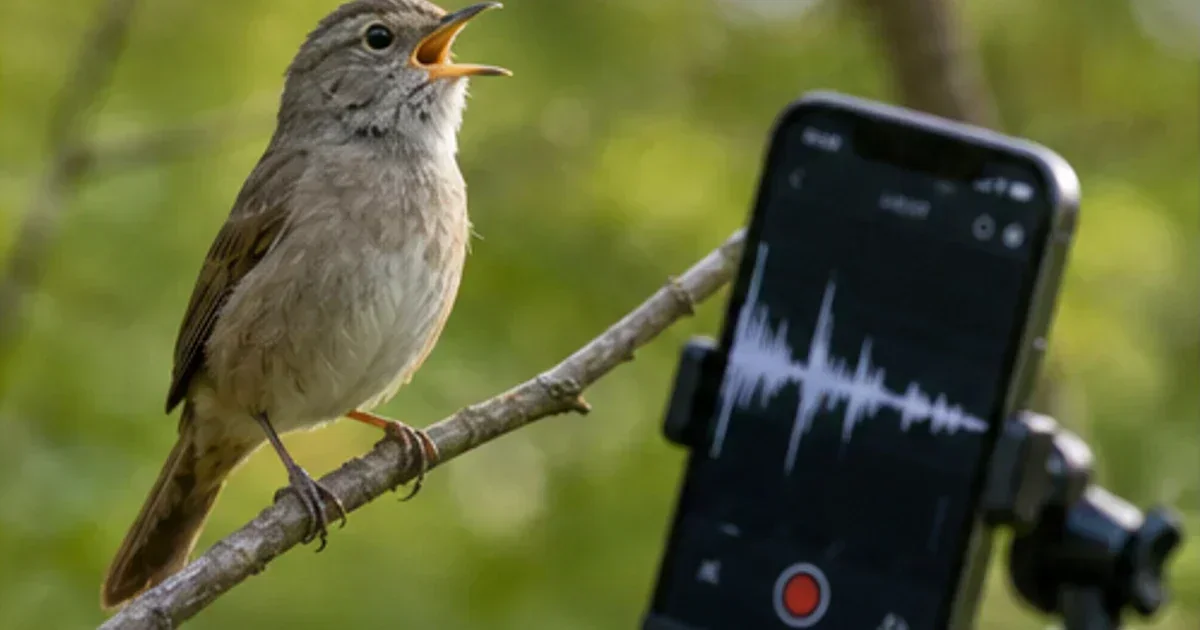
When sound is clear, a recording can be helpful. Bird Lens’s sound ID tool can support your own notes, but treat any result as a suggestion to evaluate, not a final verdict. Background singers, mimicry, wind, and overlapping calls can confuse both people and software.
Think in Probabilities, Not Certainties
Habitat and behavior are clues, not guarantees. Birds sometimes break the rules:
- Migrants stop in odd places.
- Young birds may wander after breeding.
- Storms can displace seabirds or shorebirds.
- Urban areas create unusual food and shelter.
- Sick or exhausted birds may behave abnormally.
- Escaped domestic or captive birds can appear in the wild.
A good identification balances evidence. If the plumage suggests one species but the habitat and behavior strongly suggest another, pause. Recheck size, shape, range, season, and voice. Consider whether you are seeing a juvenile, female, nonbreeding plumage, or a worn individual.
It is fine to record an uncertain bird as “hawk species,” “probable Song Sparrow,” or “Empidonax flycatcher.” Honest uncertainty is better than a confident mistake. For a broader grounding in the basics, see the beginner bird identifier guide.
Make Better Field Notes
Field notes do not need to be literary. They need to be specific. A few plain observations made at the time are often more valuable than a memory reconstructed later.
Record:
- Date, time, and location
- Habitat type and microhabitat
- Bird size compared with familiar species
- Shape and posture
- Movement style
- Feeding behavior
- Vocalizations
- Flock size or companions
- Weather and light conditions
- Your confidence level
Try writing what you actually saw rather than what you think it means. “Small bird, olive above, pale below, two wing bars, perched upright, flew out and returned to same branch over shaded creek” is stronger than “maybe flycatcher?” The interpretation can come after the observation.
Short Checklist: Habitat and Behavior ID
Use this quick sequence in the field:
- Where is the bird? Broad habitat and exact microhabitat.
- What layer is it using? Ground, shrub, trunk, canopy, water, or air.
- How does it move? Hop, walk, climb, dive, soar, hover, bob, or creep.
- How does it feed? Probe, glean, chase, dive, dabble, hammer, or pick seeds.
- Is it alone or with others? Mixed flock, same-species flock, pair, or solitary.
- What sounds does it make? Song, call, alarm, flight note, or silence.
- Does the ID fit season and place? If not, gather more evidence.
- How certain are you? Definite, probable, possible, or unknown.
Observe Without Pressuring the Bird
Bird identification should never require crowding, flushing, or baiting wildlife. Keep a respectful distance, especially around nests, roosts, and feeding areas. Avoid playing recordings to draw birds out, particularly during breeding season or in heavily birded locations. Stay on trails where required, and do not trample sensitive habitat for a photo.
If the bird moves away, let it. If it freezes, alarms, or changes behavior because of your presence, you are too close. Better fieldcraft produces better observations anyway: quiet watching often reveals natural behavior that disappears when a bird feels pressured.
Conclusion
Habitat and behavior turn bird identification from a color-matching exercise into a more reliable field process. Notice the setting, the layer, the movement, the feeding style, and the bird’s relationship to other birds around it. Then weigh those clues against plumage, voice, season, and range.
Some birds will remain uncertain, and that is part of honest birding. The goal is not to force every sighting into a name. The goal is to observe well enough that, when the evidence is strong, the name follows naturally.
Try the tools
Put this advice into action
Use Bird Lens to identify a bird by photo or sound, then compare field marks and habitat.
Photo Bird ID
Upload a bird photo for AI-assisted species identification with encyclopedia links.
Sound Bird ID
Record bird songs and calls to get likely species matches from your audio capture.
Field Notes Bird ID
Identify likely birds from field marks, habitat, behavior, place, and date.
Similar Species Comparison
Compare two easily confused bird species using diagnostic field marks.
Beginner bird identifier guide: from first sighting to confident identification
Beginner bird identifier guide: from first sighting to confident identification: practical, field-tested guidance for identifying and observing birds with confidence.