
Ethical Bird Photography Without Disturbing Wildlife
Published on 4/12/2026 • 9 min read
A good bird photograph should not come at the bird’s expense. That sounds obvious, but in the field the line can blur quickly: a warbler sits half-hidden behind leaves, an owl is roosting just beyond a trail, a shorebird chick crouches in wrack, and the better angle is only ten steps away.
Ethical bird photography is less about one perfect rule and more about reading behavior, accepting limits, and knowing when to lower the camera. The strongest field photographers tend to be patient naturalists first. They understand light, distance, habitat, and body language. They also understand uncertainty: if you are not sure whether your presence is changing a bird’s behavior, assume it might be.
Put the Bird Before the Photograph
The central principle is simple: do not cause a bird to change essential behavior for the sake of an image.
“Essential” includes feeding, resting, brooding, preening, migrating, defending territory, or caring for young. A bird that stops foraging to watch you, shifts repeatedly on a nest, gives alarm calls, flushes, or leads chicks away from cover is already paying a cost.
Not every glance in your direction is a crisis. Birds notice movement all day. But repeated stress adds up, especially during migration, winter cold, breeding season, or extreme heat. Small birds may have narrow windows to feed. Shorebirds may be conserving energy for long flights. Owls and nightjars roost during the day and need rest more than they need attention.
A useful test in the field: if the bird would be doing something important without you there, and it is no longer doing it because of you, back off.
Learn Bird Behavior Before Chasing Better Angles
Ethical photography improves when you can interpret what you are seeing.
Signs You Are Too Close
Common warning signs include:
- Alarm calls that continue as you approach
- Repeated tail flicking, wing flicking, or upright alert posture
- A bird freezing instead of feeding
- Adults carrying food but refusing to approach a nest
- Shorebirds walking or running away instead of resting
- Owls elongating their bodies, staring, or shifting perches
- Chicks scattering from cover
- Birds flushing repeatedly ahead of you
Some species tolerate people better than others, and individuals vary. A city heron may ignore foot traffic, while a grassland sparrow may vanish at a distant stop. The ethical response is not to ask, “How close can I get?” but “What distance lets the bird continue naturally?”
Watch Before Moving
When you find a bird, pause. Notice its pattern. Is it feeding along a fence line? Returning to the same perch? Moving with a mixed flock? Guarding young? If you wait quietly, the bird may offer better views on its own.
This also leads to better photographs. Images made from anticipation often look calmer than those made by pursuit. A bird moving naturally through its habitat tells a clearer story than one caught mid-escape.
Distance Is an Ethical Tool
Long lenses help, but they do not grant permission to crowd wildlife. A photographer with a large lens can still disturb a bird by stepping into sensitive habitat, blocking a nest approach, or lingering too near a roost.
Use distance actively:
- Stay on trails when possible.
- Avoid walking directly toward a bird; angle away or remain still.
- Let birds close the gap if they choose.
- Use natural cover without hiding in a way that blocks escape routes.
- Crop the image rather than forcing a closer frame.
Modern cameras and phones can capture more than many birders expect, especially with patient technique. If you are trying to identify a distant bird from a photo, tools like Bird Lens Photo ID can help you evaluate field marks without needing to push closer. Treat results as suggestions, not certainty, especially with blurry images, odd lighting, juveniles, or similar species.
Nesting Birds Need Extra Caution
Nest photography is one of the easiest places to do harm. Adults may reveal nest locations through repeated visits, and human attention can attract predators or other people. Even a quick look can leave scent or trampled vegetation near a concealed nest.
Avoid photographing active nests unless you have a strong conservation, research, or permitted monitoring reason. For casual birding and social media, it is rarely worth the risk.
If you accidentally discover a nest:
- Leave the area calmly.
- Do not linger to watch the adults return.
- Do not clear branches or grass for a view.
- Do not share the exact location publicly.
- If reporting to a local atlas or monitoring project, follow their data sensitivity guidelines.
Cavity nests, ground nests, and open cup nests all have different vulnerabilities, but the basic rule is the same: do not make the nest easier for predators, crowds, or weather to affect.
Be Especially Careful With Owls, Raptors, and Rare Birds
Some birds attract intense attention. Owls are a familiar example. A roosting owl may seem calm because it does not fly, but still be stressed. Wide eyes, a stretched posture, or repeated repositioning can signal discomfort. Daytime disturbance can cost a nocturnal hunter needed rest.
Raptors can also be sensitive around nests or winter feeding areas. Approaching too closely may push them off prey or away from young. With rare birds, the issue often becomes cumulative disturbance. One quiet observer may not be a problem. A stream of photographers over days can be.
When rare bird locations circulate, consider whether adding another visit is necessary. If you do go, keep distance, follow local guidance, and avoid posting precise coordinates for sensitive birds.
Playback, Pishing, and Luring
Sound can be more disruptive than photographers realize. Playback may cause birds to defend territory, expose themselves to predators, or abandon normal routines. Pishing can draw small birds into the open, sometimes repeatedly.
Use sound sparingly, if at all, and avoid it during breeding season, near nests, or around threatened species. In many protected areas, playback is restricted or prohibited. Even where legal, restraint is good fieldcraft.
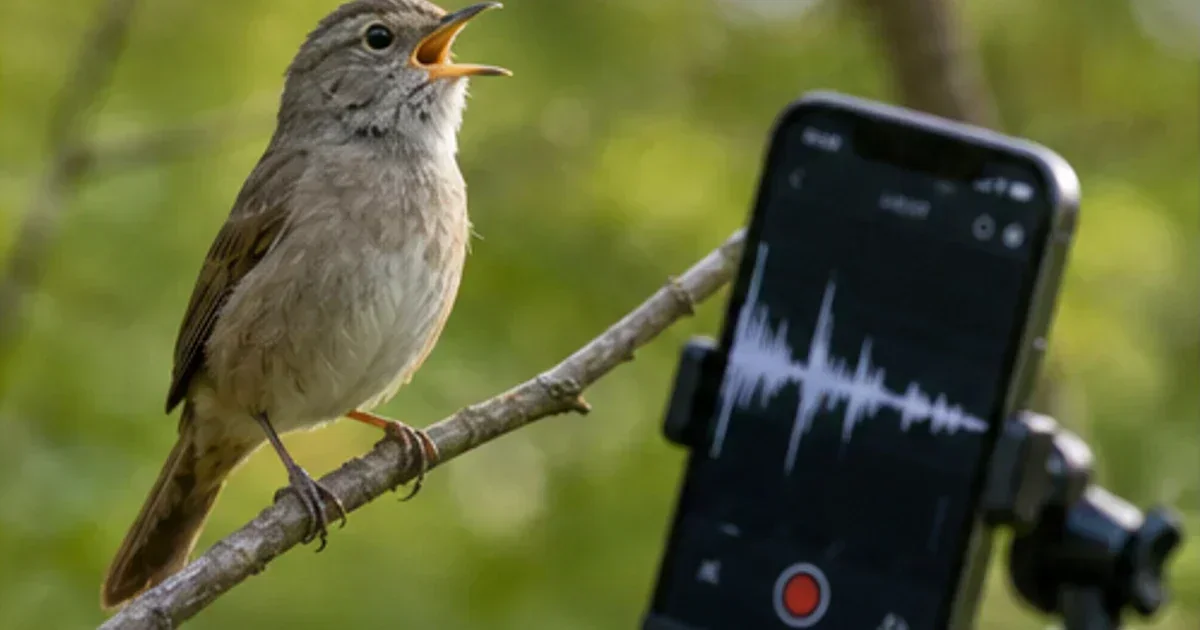
If you are identifying a bird by voice, recording natural sound from a respectful distance is usually better than provoking a response. A tool such as Bird Lens Sound ID can support learning, but it should not replace careful listening or ethical judgment. Background noise, overlapping songs, mimicry, and regional variation can all create uncertainty.
Baiting raises similar concerns. Feeding birds for photography can alter behavior, increase disease risk, attract predators, or create dependency. Practices vary by region and species, but when in doubt, skip the lure.
Habitat Matters as Much as the Bird
Disturbance is not only about flushing an individual bird. It can also mean damaging habitat.
Wetlands, dunes, alpine meadows, desert crusts, and grasslands can be fragile. A shortcut for a clearer view may crush nests, trampling cover, or leave tracks that invite others to follow. Beach-nesting birds are especially vulnerable because eggs and chicks blend into sand and shell fragments.
Respect closures, ropes, signs, and seasonal restrictions. They are often placed because birds are present even when you cannot see them. If a refuge, park, or reserve asks visitors to stay on paths or out of certain zones, that is part of the photograph too: the unseen boundary that protects the subject.
Share Images Responsibly
Ethical bird photography continues after the shutter.
Before posting, ask what your image might encourage. Does it reveal a nest? A roost? A rare bird in a sensitive location? Does the caption suggest that close approach or handling was acceptable? Could the background identify a restricted site?
Responsible sharing may mean:
- Removing location data from files
- Using broad place names instead of exact spots
- Delaying posts during nesting season
- Not tagging sensitive roosts or nests
- Explaining that the image was made from a trail, blind, vehicle, or long distance
This is not about secrecy for its own sake. It is about reducing pressure on birds that cannot consent to becoming destinations.
Identification Without Pressure
Many bird photographers are also trying to learn. That is a good thing. Identification encourages attention to shape, behavior, plumage, range, season, and sound. But uncertain IDs can tempt people closer: one more step, one more angle, one more flushed bird.
Try to gather information without escalation. Take a record shot from where you are. Note habitat and behavior. Listen. Compare field marks later. Beginner birders may find a structured approach helpful in the beginner bird identifier guide, especially when separating similar species.
Uncertainty is normal. Some birds cannot be identified confidently from a poor photo. Some are hybrids, juveniles, molting adults, or backlit silhouettes. It is better to label an image “probable,” “sp.,” or “unidentified” than to disturb a bird for a firmer answer.
Short Ethical Bird Photography Checklist
Before, during, and after photographing, run through this quick check:
- Am I blocking feeding, resting, nesting, or escape?
- Has the bird changed behavior because of me?
- Am I too close to a nest, roost, lek, or young bird?
- Am I staying on durable surfaces or approved trails?
- Am I avoiding playback, baiting, and repeated flushing?
- Could this photo reveal a sensitive location?
- Would I be comfortable if several other people copied my exact behavior?
- Can I accept a distant or imperfect photo?
That last question may be the most practical. Many ethical decisions become easier when an imperfect image is allowed to be enough.
Better Photographs Come From Better Fieldcraft
Ethical practice does not mean giving up strong images. It often produces them. Birds that are not pressured behave more naturally. They feed, stretch, sing, bathe, interact, and move through good light at their own pace.
Work with the conditions you have. Learn the regular perches around a marsh. Stand where morning light falls across a hedgerow. Wait near public paths where birds are already accustomed to people. Use your car as a blind only where it is safe and legal. Keep movements slow and predictable. Let quiet minutes do the work that chasing rarely does.
For broader field habits, observation tips, and identification practice, the Bird Lens birding tips section can support a lower-pressure approach to learning birds.
Conclusion
Ethical bird photography is built on restraint, patience, and honest uncertainty. The aim is not to get as close as possible, but to leave the bird able to do what it was already doing. Keep distance, protect nests and habitat, use sound carefully, and share locations with judgment.
A missed frame is forgettable. A disturbed bird may pay a real cost. The best photograph is one that lets the subject remain wild.
Try the tools
Put this advice into action
Use Bird Lens to identify a bird by photo or sound, then compare field marks and habitat.
Photo Bird ID
Upload a bird photo for AI-assisted species identification with encyclopedia links.
Sound Bird ID
Record bird songs and calls to get likely species matches from your audio capture.
Field Notes Bird ID
Identify likely birds from field marks, habitat, behavior, place, and date.
Similar Species Comparison
Compare two easily confused bird species using diagnostic field marks.
Beginner bird identifier guide: from first sighting to confident identification
Beginner bird identifier guide: from first sighting to confident identification: practical, field-tested guidance for identifying and observing birds with confidence.