
Common Backyard Birds: A Practical Identification Guide
Published on 7/25/2025 • 9 min read
Backyards are often the best classrooms for learning birds. The species are close, repeat visits are likely, and small differences become easier to notice over time: the way a sparrow scratches under a shrub, how a chickadee lands and grabs one seed, or how a robin holds its body upright on a lawn.
This guide focuses on practical identification. Instead of memorizing every field mark at once, start with size, shape, behavior, voice, and habitat. A clear photo helps, and a good app can narrow the field, but careful observation still matters. If you are new to birding, the broader approach in our beginner bird identifier guide pairs well with the backyard examples below.
Start With the Big Clues
Most backyard birds can be sorted quickly if you look for a few major clues before chasing tiny details.
Size and Shape
Compare the bird to something familiar:
- Sparrow-sized: small, compact birds such as House Sparrow, Song Sparrow, chickadees, and finches
- Robin-sized: medium birds such as American Robin, Northern Mockingbird, and some blackbirds
- Crow-sized or larger: jays, crows, doves, woodpeckers, and raptors
Shape often matters more than color. A cardinal’s crest, a nuthatch’s short tail and long bill, or a woodpecker’s stiff posture on a tree trunk can identify the bird before you see fine markings.
Behavior
Birds reveal themselves by what they do.
Ground-feeding birds often hop or walk through grass and leaf litter. Finches and chickadees visit feeders directly. Nuthatches move headfirst down trunks. Woodpeckers brace against bark with their tails. Flycatchers and phoebes often sit still, then dart out for insects and return to a perch.
Behavior is not foolproof, but it reduces the possibilities.
Habitat and Season
A “backyard bird” in Arizona is not the same as one in Maine, Florida, or Oregon. Season also changes the cast. Some birds visit feeders in winter and disappear into breeding territories in spring. Others show up only during migration.
When identifying a bird, note:
- Region
- Date
- Weather or season
- Feeder, lawn, shrub, tree canopy, water, or roofline
- Whether it was alone, in a pair, or in a flock
These details can make a vague sighting much easier to confirm.
Common Backyard Birds and How to Recognize Them
The species below are widespread in many North American yards, though exact range varies. If a bird seems close but not quite right, check a regional field guide before settling on an ID.
American Robin
The American Robin is one of the easiest medium-sized backyard birds to learn. Look for an upright posture, gray-brown back, warm orange breast, and white markings around the eye and lower belly. On lawns, robins often run a few steps, stop, cock the head, then jab at the ground for worms or insects.
Juveniles can cause confusion. Young robins have spotted breasts, which sometimes makes people think of thrushes. In many yards, though, their size, shape, and association with adult robins provide the clue.
Northern Cardinal
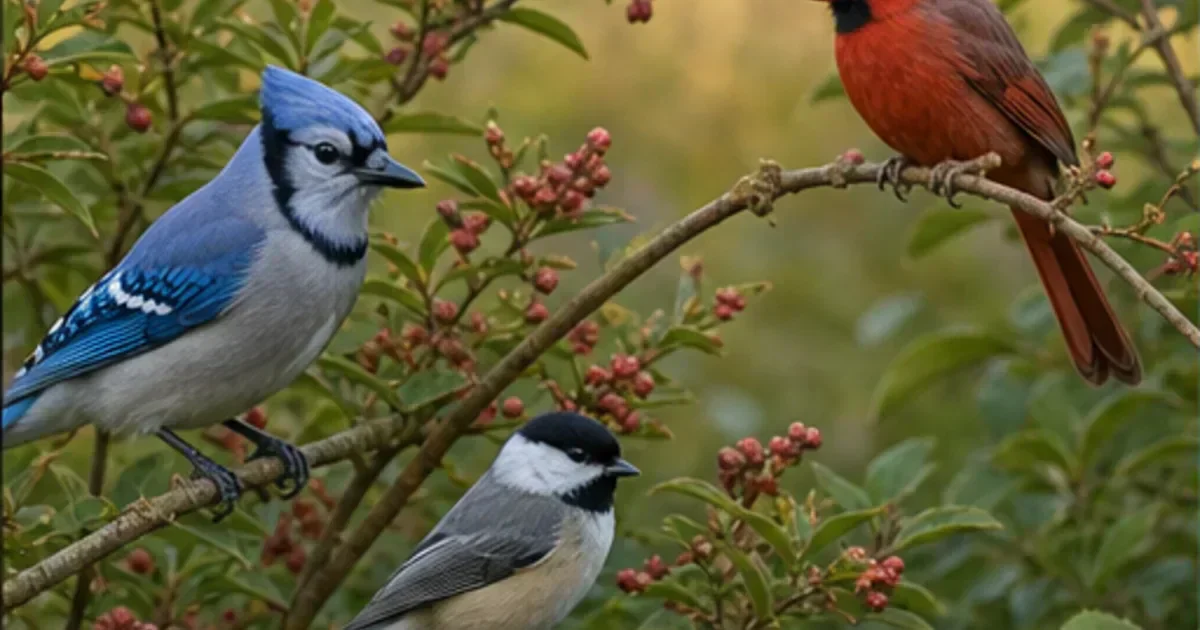
Male Northern Cardinals are bright red with a black face and thick orange-red bill. Females are subtler: warm brown or tan with red in the crest, wings, and tail. Both have a strong crest and a heavy seed-cracking bill.
Cardinals often feed low in shrubs or on the ground beneath feeders. Their sharp chip call is common, and their clear whistled songs are easier to recognize once learned. Be cautious with color alone in poor light; a backlit cardinal can look nearly black.
Blue Jay
Blue Jays are large, bold backyard birds with blue upperparts, white underparts, a crest, and dark barring in the wings and tail. Their flight looks somewhat slow and deliberate, with rounded wingbeats.
They are vocal and social, often announcing themselves before they arrive. Blue Jays may mimic hawks, which can briefly confuse both people and other birds. Their size, crest, and strong black necklace are useful field marks.
Mourning Dove
Mourning Doves are slim, soft-colored birds with small heads, long pointed tails, and gentle brown-gray plumage. They often feed on the ground under seed feeders and flush with a rapid, whistling wing sound.
Their song is a low, mournful coo, sometimes mistaken for an owl by new birders. In flight, look for pointed wings and the long tapered tail. Doves can sit very still, blending into bare soil, mulch, or roof edges.
House Sparrow
House Sparrows are common around buildings, parking lots, patios, and feeders. Males have gray crowns, chestnut sides of the head, pale cheeks, and a black bib. Females are plain brown with a pale eyebrow and streaked back.
They are not native to North America but are deeply established in human environments. Their chunky shape and constant chirping around structures help separate them from many native sparrows, which often prefer brushier cover and may show more delicate facial patterns.
Song Sparrow
Song Sparrows vary by region, but many show brown streaking on a pale breast, often gathering into a central dark spot. The face usually has a patterned look, with a pale eyebrow and brown malar stripe.
Behavior helps. Song Sparrows often stay near low shrubs, brush piles, wet edges, or weedy corners rather than open patios. Their song is rich and varied, usually starting with a few clear notes followed by trills or buzzes. If the bird is streaked, sparrow-sized, and singing from a shrub, Song Sparrow is often worth considering—but not assuming.
House Finch and Purple Finch
House Finches are frequent feeder birds. Males often show red, orange, or yellowish color on the head, breast, and rump, with brown streaking below. Females are brown and streaky, with a relatively plain face.
Purple Finches, where present, can look similar. Male Purple Finches tend to appear more evenly washed with raspberry-red, especially over the head and back. Females show a stronger facial pattern than female House Finches. Range and season matter here. A quick photo can help, and tools like photo ID are most useful when the image shows the face, bill, and breast clearly.
Black-capped or Carolina Chickadee
Chickadees are small, active birds with black caps and bibs, white cheeks, gray backs, and pale underparts. Black-capped Chickadees dominate farther north; Carolina Chickadees are more southern. In overlap zones, identification can be genuinely difficult, and hybrids occur.
Watch their behavior: chickadees often grab a seed, fly to a branch, hammer it open, then return. Their voices are important, but calls vary. If you live near the range boundary, it is reasonable to record “chickadee species” rather than force an uncertain ID.
Tufted Titmouse
The Tufted Titmouse is a small gray bird with a crest, large dark eye, pale belly, and sometimes peachy flanks. It often visits feeders with chickadees and nuthatches but looks larger and more crested.
Its whistled “peter-peter-peter” song is a common sound in eastern yards. Like chickadees, titmice may take one seed at a time and carry it away.
White-breasted Nuthatch
White-breasted Nuthatches are compact birds with blue-gray backs, white faces and underparts, black or dark caps, and long pointed bills. Their habit of climbing headfirst down tree trunks is one of the best clues.
At feeders, they often take sunflower seeds and retreat to bark crevices. Their nasal calls carry well and may sound toy-like. Red-breasted Nuthatches and Brown-headed Nuthatches occur in some regions, so check range and head pattern.
Downy and Hairy Woodpecker
Downy Woodpeckers are small, often visiting suet feeders and tree trunks. They have black-and-white patterned backs, white underparts, and a short bill. Males show a small red patch on the back of the head.
Hairy Woodpeckers look very similar but are larger, with a longer, heavier bill. Size can be hard to judge unless another bird is nearby. Bill length is often the better clue: on a Hairy, the bill looks nearly as long as the head is deep; on a Downy, it looks noticeably short.
European Starling
European Starlings are stocky, short-tailed birds with pointed bills. In breeding plumage, they can look glossy black with purple-green iridescence. In winter, they are heavily speckled with pale spots.
They walk confidently on lawns and often gather in noisy flocks. Their calls include whistles, clicks, and mimicry. Starlings can look surprisingly different by season, so note the short tail, triangular wings, and bold ground-walking behavior.
Common Grackle
Common Grackles are larger than starlings, with long tails, glossy bodies, and often a bright yellow eye. In good light, males show iridescent blue or purple on the head and bronze or greenish tones on the body.
At feeders, they may arrive in groups and dominate smaller birds. In flight, the long tail and steady wingbeats help separate them from Red-winged Blackbirds and starlings.
Northern Mockingbird
Northern Mockingbirds are slim gray birds with long tails and pale underparts. In flight, they flash bold white wing patches. They often perch on rooflines, fences, shrubs, or wires, then drop to the ground or fly to another exposed perch.
Their song is a long sequence of repeated phrases, often imitating other birds and sounds. In southern and suburban areas, mockingbirds may defend berry shrubs, nest sites, or feeders vigorously.
How to Use Sound Without Overconfidence
Bird sounds are powerful identification clues, especially when leaves hide the bird. But sound can mislead beginners because many species have multiple calls, and some birds mimic others.
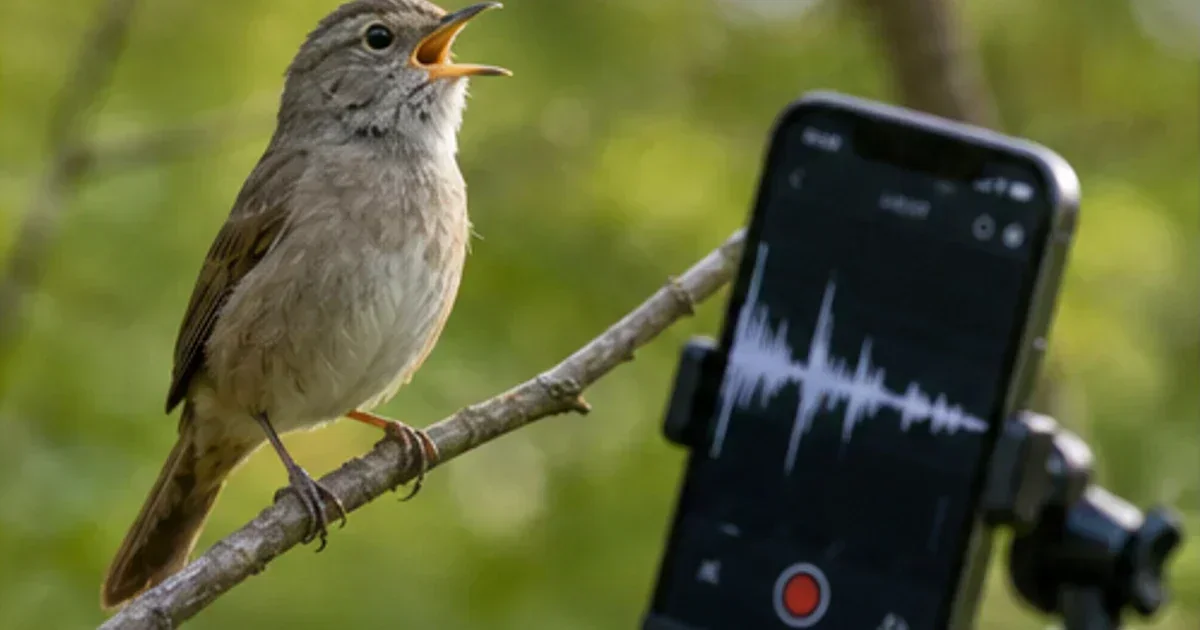
Use sound alongside location, habitat, and any visual clue. If you record a bird, keep the recording short and avoid disturbing it. For a second opinion, try sound ID, but treat the result as a suggestion rather than a verdict. A good identification explains why other likely species were ruled out.
A Short Backyard Bird ID Checklist
Before naming the bird, ask:
- What size was it compared with a sparrow, robin, or crow?
- What was its shape: crest, bill length, tail length, posture?
- Where was it: ground, feeder, trunk, shrub, roof, open air?
- How did it move: hopping, walking, climbing, flycatching, flocking?
- What colors or patterns stood out, and in what light?
- Did it call or sing?
- What is expected in your region and season?
- Is the identification certain, probable, or only a possibility?
That last question matters. Good birders use uncertainty carefully. “Probably a House Finch” is better than a confident but unsupported claim.
Ethical Observation in the Backyard
Backyard birding should help birds, not pressure them. Watch nests from a distance. Do not trim shrubs with active nests. Keep cats indoors or supervised. Clean feeders regularly, especially during wet weather or disease outbreaks. If birds appear sick—fluffed, lethargic, crusty-eyed, or unwilling to fly—pause feeding and follow local wildlife guidance.
Avoid using repeated playback to lure birds, particularly during breeding season. A brief recording for identification is usually less intrusive than playing calls back at the bird. When photographing, let the bird choose the distance. A natural behavior seen briefly is worth more than a close image gained by stress.
For more practical habits, see our general birding tips.
Conclusion
Common backyard birds become easier to identify when you slow down and look at the whole bird: size, shape, behavior, sound, habitat, season, and probability. Color helps, but it is only one part of the puzzle. Some identifications will remain uncertain, especially with brief views, young birds, similar species, or poor light. That is normal.
Keep notes, compare carefully, and let repeated observations teach you the local patterns. A backyard is not a lesser birding spot. It is where many of the most useful identification skills are built.
Try the tools
Put this advice into action
Use Bird Lens to identify a bird by photo or sound, then compare field marks and habitat.
Photo Bird ID
Upload a bird photo for AI-assisted species identification with encyclopedia links.
Sound Bird ID
Record bird songs and calls to get likely species matches from your audio capture.
Field Notes Bird ID
Identify likely birds from field marks, habitat, behavior, place, and date.
Similar Species Comparison
Compare two easily confused bird species using diagnostic field marks.
Beginner bird identifier guide: from first sighting to confident identification
Beginner bird identifier guide: from first sighting to confident identification: practical, field-tested guidance for identifying and observing birds with confidence.